Imagine this: You’re walking through a bustling street market in Guadalajara or a crowded tianguis in Mexico City. Suddenly, you hear two friends greeting each other with words that sound incredibly aggressive, but they laugh and hug. And you just think: What? I don’t understand. If you don’t understand Mexican culture yet, this article will help you realize why locals laugh at those swear words instead of getting angry.
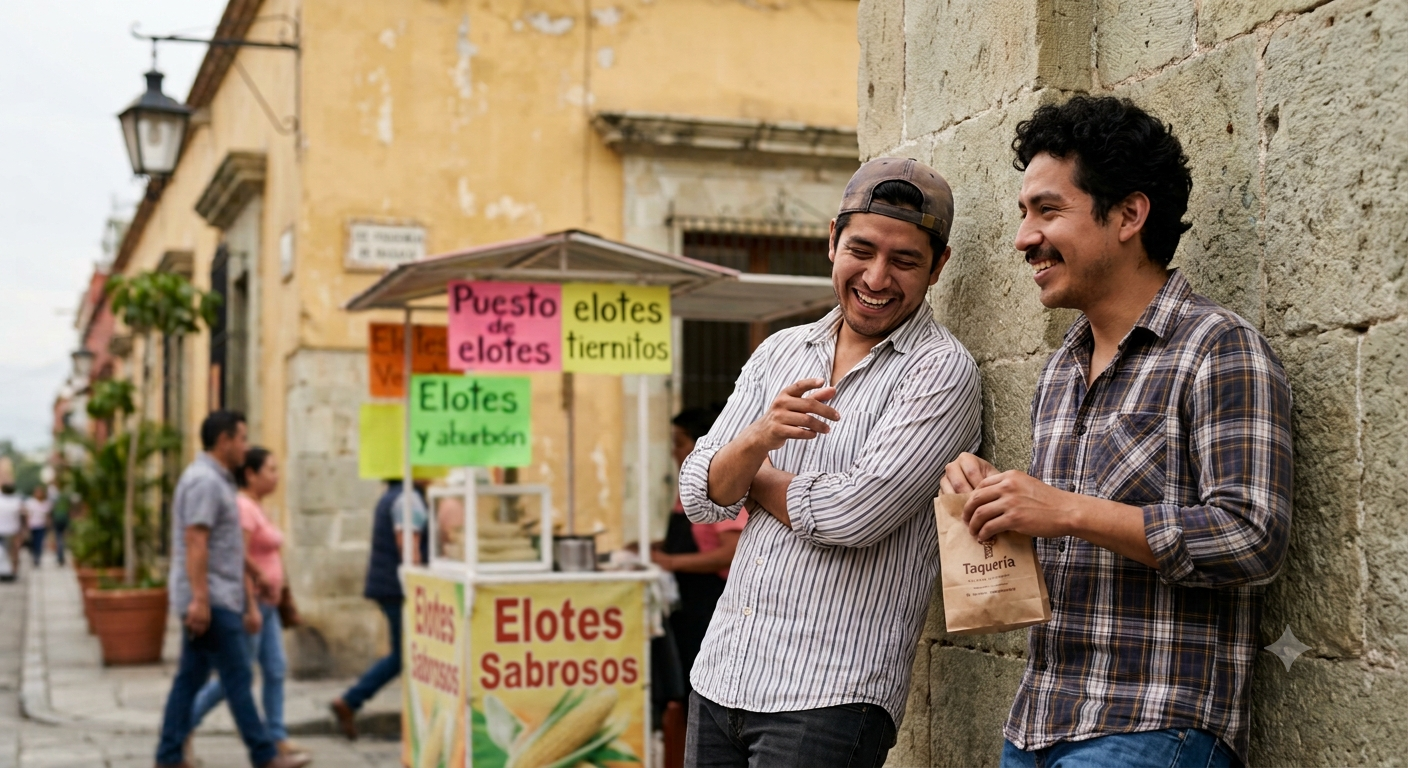
Welcome to Mexico, where the line between a heavy insult and a friendly nickname is thinner than a corn tortilla.
As an expat or advanced Spanish student, learning the local slang is essential for survival. However, delving into the world of Mexican insults and swear words requires extra cultural caution. In Mexico, what you say matters, but cómo y to whom you say it matters even more.
This is a comprehensive analysis of the most common Mexican swear words you’ll hear on the streets, in movies, or on Netflix. Read them, understand them, but think twice before adding them to your everyday vocabulary. Because if you just blurt them out because they come to mind, you could easily get your ass kicked—meaning you could get a terrible beating.
The Golden Rule of Mexican Swear Words: Context is Key
Before we dive into the vocabulary, as a local Spanish teacher, I must give you a fundamental piece of advice: Never use these words with strangers, authority figures, or at work.
Why not? you might ask. Well, because you could get your ass kicked (and yes, I mean literally beaten up).
In Mexican culture, swear words (known as groserías) change completely depending on the relationship between the people. If you say them to your best friend while having a beer, you’re showing camaraderie. If you use them with a taxi driver or a market vendor, you could end up in a very awkward or dangerous situation.
🚀 Ready to Sound Like a True Mexican?
Understanding slang is easier when you practice with a native speaker. Stop guessing and learn conversational Mexican Spanish safely.
Insults and Essential Meanings in Mexican Slang
Here are the most common insults in contemporary Mexican speech, from lighthearted jokes to serious offenses.
1. Pendejo / Pendeja
This is, without a doubt, the most common swear word in the entire country. While in some South American countries it means “kid,” in Mexico it means **”idiot,” “fool,” or “imbecile.”**
- How to use it: It ranges from a mild complaint about someone’s driving (“¡Mira qué pendejo!” – Look how stupid!) to a direct and forceful insult: “Eres un pendejo” (You’re a fool). It carries a lot of weight, so avoid using this phrase unless there’s a real reason.
- When is there a reason? When someone makes you genuinely angry. You can say it, but you better know there’s going to be a fight right after.
2. Güey (In a negative sense)
As we saw in our Mexican spanish slang guide, güey universally means “buddy” or “dude.” However, its historical origin comes from buey (ox), which implies a slow and clumsy animal. If someone changes their tone and abruptly calls you “güey”, or says “Estás bien güey” (You’re really dumb), they’re not being nice; they’re calling you stupid.
Also, watch out: if someone tells you, “Te están haciendo güey,” it’s not a compliment—they’re telling you that you are being cheated on or taken advantage of.
3. Naco / Naca
This is a cultural insult with strong socio-economic connotations. It’s used to describe someone who is vulgar, classless, or completely rude. Whether it’s for playing loud music on public transport or being rude to a waiter, locals will quickly label that behavior as naco.
But be very careful: never say this word lightly, because nobody likes being called naco. But if you want to say it anyway—even at the risk of getting your ass kicked—say it with all the courage in the world: “¡Eres un naco!” (You’re a hick!).
4. Pinche
On its own, pinche isn’t an insult directed at a person, but it acts as the ultimate amplifier of any negative word. It roughly translates as “damn,” “useless,” or “low-quality.” It often serves as a complement to another insult like “pinche güey.” With these two words combined, they’re telling you that you’re a despicable, worthless dude.
- “El pinche tráfico” (The damn traffic)
5. Metiche
A mild but very precise term. A metiche is a meddlesome or gossipy person who interferes in matters that don’t concern them. If someone gossips or meddles too much in your affairs, they’re being a meddler.
So if someone snoops around your business, you can easily call them a busybody—or a pinche metiche if you want to make the insult even stronger. Just remember, either phrase can easily get you beaten up if said to the wrong person.
The Absolute Red Line: “La Chingada” and Family Insults
If you want to know where the real danger lies in Mexican vocabulary, look at words involving the mother. In Mexican culture, the maternal figure is sacred. Insults that touch upon her are considered grave, maximum offenses.
Words derived from the root “Chingar” (a complex verb with hundreds of meanings) can quickly become violent. Phrases like “Chinga tu madre” are words that instantly provoke physical arguments. Unless you are fully aware of a high-risk situation, completely eliminate this phrase from your vocabulary.
Even among Mexicans, “Chinga tu madre” is not tolerated in casual talk. When this phrase comes up, a fight is practically guaranteed.
Another dangerous variant is the phrase “hijo de tu puta madre” (son of your whore mother). It is very, very strong, even without using the verb chingar. When someone drops this phrase, you know fists are about to fly.
Oh, and what about “hijo de tu rechingada madre” (son of your fucking mother)? This insult is like saying “fuck you twice” with extra emphasis. Nobody tolerates this phrase. If you want to test it, say it to a Mexican, but be prepared to run fast because they will want to beat the absolute crap out of you.
How to React to These Expressions
As an expat living in Mexico, you’ll inevitably hear these words around you. Here’s how to handle them:
- Don’t take it personally right away: Pay close attention to the tone. When someone laughs or smiles while saying a swear word, it means it’s just a joke or heavy banter (carrilla).
- Don’t imitate immediately: Just because you hear locals use strong words naturally doesn’t mean a foreigner can use them with the same cultural freedom. First, earn their trust.
- Focus on functional slang: Use safe and positive terms like chido or buena onda while you get used to the local rhythm.
Master the Local Language
Achieving fluency involves expanding your vocabulary little by little. This guide will serve as a protective shield for your social vocabulary. But don’t stop here: explore our complete set of resources to help you navigate the streets with ease:
- La guía definitiva de "Chingón" y sus 100 significados.
- What does “Ahorita” mean? The Mexican time paradox.
- How to order food like a local: taqueria edition.
¡BOOK YOUR SESSION NOW!
Forget the textbooks. Real Mexican Spanish starts here.